Fire risk assessment in Pimlico
White stucco terraces divided into flats, and one of London's best-known post-war estates.
- Written report to keep on file
- Clear action plan, highest risk first
- Price agreed before booking
Pimlico was developed in the nineteenth century largely by the builder Thomas Cubitt, and its streets of white stucco terraces are still its character. Most of those houses were divided into flats long ago, usually with a shared front door, hall and stair, and a basement flat with its own entrance in the area below the street.
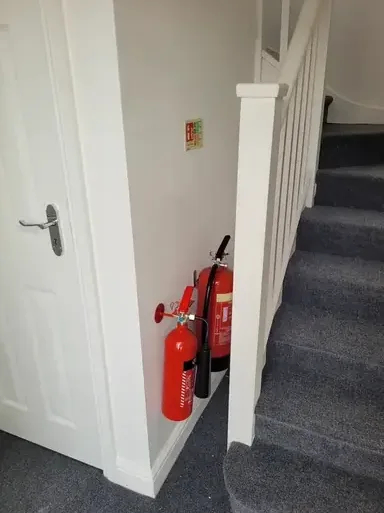
Converted terraces
In a house converted to four or five flats, the freeholder, often a company owned by the leaseholders, is the responsible person for the hall and stair. The fire risk assessment looks at each flat door onto the stair, the detection in the common parts, the lighting if the power fails, and anything stored in the hall. The basement flat's link to the hall, if it has one, matters because smoke from below rises straight up the stair.
Pimlico is a conservation area, and many of these terraces are listed. Changes to front doors, fanlights and stair balustrades may need consent from Westminster City Council.
Churchill Gardens and the estates
Churchill Gardens, by the river, is a large post-war council estate of blocks of flats. Estates like this are assessed by the landlord, which in Westminster is usually the council or a housing association. A leaseholder who owns one flat is not responsible for the stairs and landings, but does control their own flat.
Near Victoria
Belgrave Road and the streets near Victoria station have many small hotels in converted terraces. They carry sleeping risk and need their own assessments by the hotel operator.
Converted houses usually fall into our small premises price, from around £550 plus VAT.
Send the postcode and tell us what the premises are. A hotel, a restaurant, an office floor or a block of flats. We will price it.